


New Markets, New Opportunities: Poland’s Meat Industry Strengthens Its Export Position
Poland’s meat industry continues to expand its presence in international markets. Record-breaking beef exports, access to the Egyptian market for 40 Polish meat processing plants, and the lifting of restrictions on poultry exports to Cuba are further signs of growing opportunities for Polish producers. At the same time, the industry is investing in building product recognition, focusing on quality, consistency, and joint promotional activities.
Polish Beef – Record Exports and a Unified Brand
Poland is one of the leading beef producers in the European Union, ranking fifth in terms of production and second, after Ireland, as a net exporter. Approximately 80–90% of domestic beef production is exported, primarily to other EU countries.
In 2025, the value of Polish beef exports increased by approximately 30%, reaching a record €3.25 billion. The total export volume of beef products amounted to 545,000 tonnes.
However, the industry aims to strengthen its position not only by increasing sales but also by enhancing the value and recognition of Polish beef. This is the objective of the “Polish Beef” (Polska Wołowina) initiative, which brings together eight of the country’s largest meat processing companies, accounting for more than 70% of Poland’s beef exports.
The joint brand will focus primarily on the culinary qualities of Polish beef, including its flavour, tenderness, juiciness, and consistent quality.
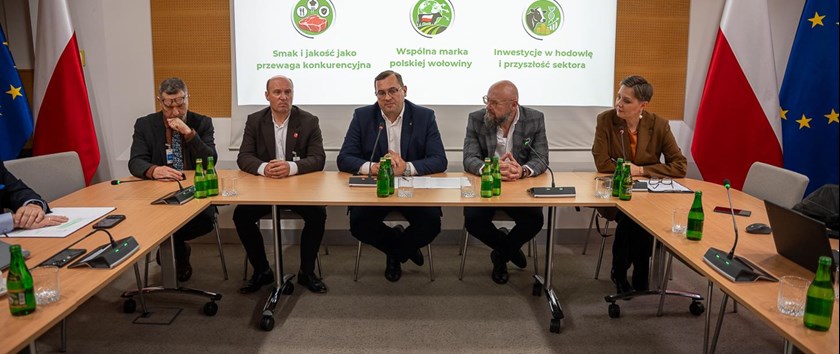
“We cannot compete solely on price, because there will always be someone offering a cheaper product. We want to build global recognition of Polish beef based on high, consistent quality and excellent taste. This requires cooperation between farmers, processors and public authorities, as well as the effective use of promotional funding,” emphasised Stefan Krajewski, Poland’s Minister of Agriculture and Rural Development.
Another important element of the initiative is the planned introduction of a Polish beef eating-quality grading system, designed to help consumers identify products that meet specific quality standards.
Egypt Opens Its Market to 40 Polish Meat Processing Plants
New export opportunities for Poland’s meat industry are also emerging in Africa. On 22 October 2026, the Egyptian authorities confirmed export authorisations for all 40 Polish poultry and beef processing plants that had undergone audits by Egyptian veterinary services. This decision creates new sales opportunities for Polish producers and strengthens prospects for trade cooperation with Egypt, one of Africa’s important food importers.
The potential of this market is also reflected in trade figures. In 2025, Polish agri-food exports to Egypt reached €104 million, representing an 18% year-on-year increase. In the first half of 2026, exports amounted to €68.3 million, an increase of nearly 50% compared with the same period of the previous year.
Cuba Reopens Its Market to Polish Poultry
Polish poultry producers have also regained access to the Cuban market. On 27 October 2026, Poland’s Chief Veterinary Inspectorate announced that Cuba had completely lifted its ban on imports of Polish poultry meat and poultry products.
The decision followed the recognition of Poland’s status as free from highly pathogenic avian influenza (HPAI), in accordance with the standards of the World Organisation for Animal Health (WOAH).
The removal of restrictions paves the way for the resumption of trade with Cuba and highlights the importance of food safety, veterinary supervision, and international cooperation in developing agricultural and food exports.
Quality, Safety and New Export Destinations
Recent decisions concerning access to foreign markets demonstrate the importance of cooperation between producers, public authorities, and institutions responsible for food safety in supporting the development of Poland’s meat industry.
Opening new export destinations enables companies to diversify sales and reduce their dependence on individual markets. At the same time, product quality, transparency of production processes, and the development of recognisable brands are becoming increasingly important in maintaining competitiveness internationally.
However, gaining market access is only the first step. Establishing relationships with importers, developing distribution networks, and effectively promoting Polish food products among international buyers remain equally important.
POLAGRA Supports the International Growth of Poland’s Food Industry
Export development, the exploration of new markets, and strengthening the international recognition of Polish products are also key priorities reflected in the activities of POLAGRA Trade Fair. The event brings together food producers, retailers, distributors, and HoReCa professionals, providing a platform for showcasing products and establishing international business relationships.
One of the initiatives supporting international expansion is the Hosted Buyers Programme, which facilitates direct business meetings between Polish producers and selected buyers and importers from around the world.
In the context of the recent opening of the Egyptian market, particular attention should also be given to the Africa Food & Trade Forum, held as part of POLAGRA. The Forum focuses on developing economic cooperation between Poland and African countries, with particular emphasis on the agri-food sector, exports, and food security.
African markets represent promising opportunities for Polish food exporters, including producers of meat and meat products. Dialogue with representatives of public authorities, business institutions, and international companies helps identify the specific needs of individual markets and develop new opportunities for trade cooperation.
The next edition of POLAGRA will take place on 15–17 September 2027 in Poznań, Poland. The event will provide another opportunity to showcase the potential of Poland’s food industry, establish relationships with international partners, and explore new export opportunities.
Sources: Polish Ministry of Agriculture and Rural Development (October 2026); Chief Veterinary Inspectorate of Poland (October 2026).