


Business Development Center – the answer to the key challenges of the food industry
Digital transformation, AI, funding, cost optimization, HR, marketing, and legal support – discover the Business Development Center, a new space at the POLAGRA fair designed to drive the growth of food companies.
The food industry has for years been one of the most demanding sectors of the economy. On one hand, it is responsible for meeting the basic needs of millions of consumers; on the other, it operates under constant pressure from rising costs, changing regulations, labor shortages, and ever-increasing market expectations. Today, however, a competitive advantage is no longer built solely on product quality or production line efficiency. Increasingly, it is determined by the way a company is managed.
Modern food companies face challenges that just a few years ago were not perceived as strategic. Process digitization, data security, energy cost optimization, family business succession, and effective human capital management have ceased to be topics reserved only for the largest organizations. Instead, they have become part of the daily operations of the entire industry.
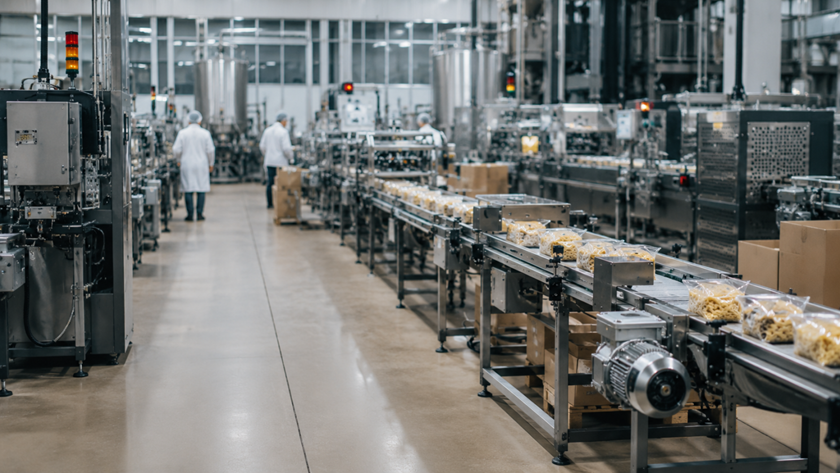
A good example is the production area. In many plants, the growth potential no longer lies in purchasing more machinery, but in making better use of the equipment already in operation. Analyzing production data, eliminating bottlenecks, reducing raw material waste, and improving process planning make it possible to increase efficiency without the need for multi-million investments. In practice, it often turns out that a few percent improvement in efficiency translates into significantly larger savings than costly expansions of machinery parks.
AI, HR, and the Challenge of Succession
At the same time, more and more enterprises are discovering the potential of artificial intelligence. Not long ago, AI was associated primarily with futuristic concepts. Today, it finds applications in demand forecasting, sales analysis, production planning, quality control, and the automation of administrative processes. This technology does not replace people, but rather allows them to make faster and more accurate decisions based on data. In an environment of growing market volatility, speed of response is becoming one of a company’s most valuable assets.
However, technology will not solve personnel issues. For several years, the labor market has remained one of the greatest challenges for food producers. Difficulties in recruiting qualified employees, rising labor costs, and high turnover rates mean that entrepreneurs are increasingly looking for new models of human resource management. In addition to effective recruitment, activities related to developing team competencies, building employee engagement, and flexible management methods are gaining importance—including the use of interim managers who support companies during periods of change, restructuring, or dynamic growth.
Changes also affect business owners. Many Polish food companies were established as family businesses built by the first generation of entrepreneurs. Today, the question is increasingly not how to grow the company, but how to ensure its stability for decades to come. Succession is no longer a distant plan; it has become a key strategic element. A well-prepared process preserves management continuity, secures company assets, and reduces the risk of organizational conflict.
Financing, Energy, and Modern Marketing
Finances remain an equally vital challenge. Dynamic economic shifts mean that entrepreneurs are analyzing investment financing options more closely than ever. Funds from national and European programs can support plant modernization, the implementation of new technologies, or energy transition initiatives. However, the key is not only finding the right program but also successfully navigating the entire application process.
The energy transition, in turn, is no longer just a response to rising energy prices. For many enterprises, it is becoming a cornerstone of business resilience. Optimizing energy consumption, investing in energy efficiency, and adopting new utility management models help reduce operating costs and increase the predictability of production plant operations. In a highly competitive market, even small savings achieved in this area can have a significant impact on a company's overall profitability.
The way sales and market communication are conducted is also changing. Even long-established companies are increasingly investing in modern marketing, brand building, and the development of digital channels. In a world where purchasing decisions are routinely made based on information available online, professional communication is becoming an essential part of business strategy, including in B2B relations.
Comprehensive Business Support at POLAGRA
Overarching all these processes is another critical dimension: legal security. The growing number of regulations, new reporting obligations, data protection requirements, labor law, and commercial contracts mean that ongoing legal support is no longer a luxury, but a necessity. A well-prepared enterprise mitigates the risk of disputes and can react more swiftly to a changing regulatory environment.
While each of these challenges affects a different area of operations, they all lead to one conclusion: the modern competitiveness of food enterprises no longer relies solely on product quality or production capacity. Increasingly, it depends on organizational agility, the ability to leverage expert knowledge, and the rapid implementation of solutions that address current business needs.
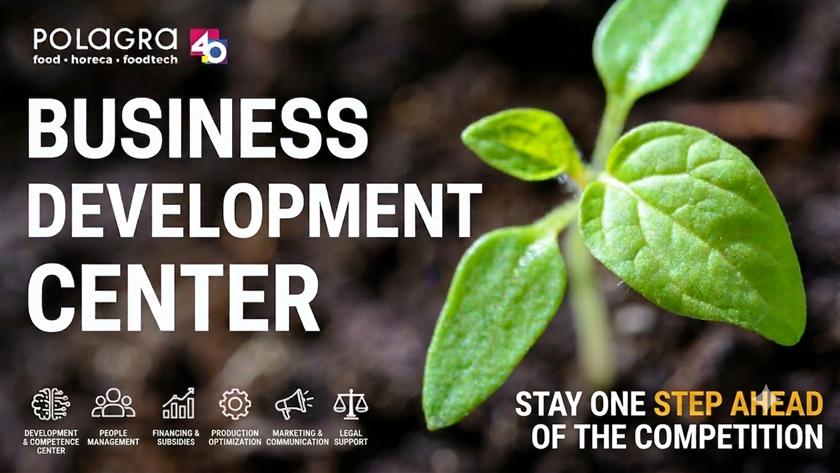
The response to these challenges will be this year’s edition of the Business Development Center at POLAGRA – a highly valued space that will once again bring together experts and partners dedicated to supporting corporate growth. The Business Development Center is a dedicated hub for entrepreneurs seeking practical solutions in organizational transformation, efficiency enhancement, and building long-term competitive advantage. Exhibiting companies will present solutions from sectors including:
-
Digital transformation and Artificial Intelligence (AI)
-
Human Resource Management (HR) and organizational development
-
Investment financing
-
Optimization of production and energy processes
-
Marketing and legal support for business
In a world where competitive advantages are built faster than ever before, access to knowledge and trusted business partners is just as valuable as access to new technologies. POLAGRA has long been the premier meeting point for producers, suppliers, and experts, and the Business Development Center will be a natural extension of this mission — a space where conversations about the future of the industry translate into concrete decisions and real changes in enterprises.